The Complete Australian Buyer's Guide to Teak Outdoor Furniture
Why teak, still
Every few years a new material promises to replace teak outdoors. None has. Teak remains the benchmark for outdoor furniture because it is one of very few timbers that genuinely improves with a life outdoors. The natural oils and rubber within the grain make it resistant to rot, insects and salt air without any coating or treatment.
Not all teak is the same timber
A-grade teak comes from the heartwood of mature trees. It is dense, rich in natural oil, even in colour and close in grain. This is the timber that weathers gracefully and holds its structure outdoors.
B and C grade teak comes from the outer heartwood and sapwood of younger trees. It is lighter, less oily, more prone to cracking and uneven silvering, and often disguised with stains at the factory. The difference shows up two summers later. We cover the grades in detail, including reclaimed teak, in A-grade vs reclaimed teak.
At Sissonne Outdoor we use A-grade teak across our timber ranges. If a retailer does not state the grade, ask. If they cannot answer, buy elsewhere.
What to inspect before you buy
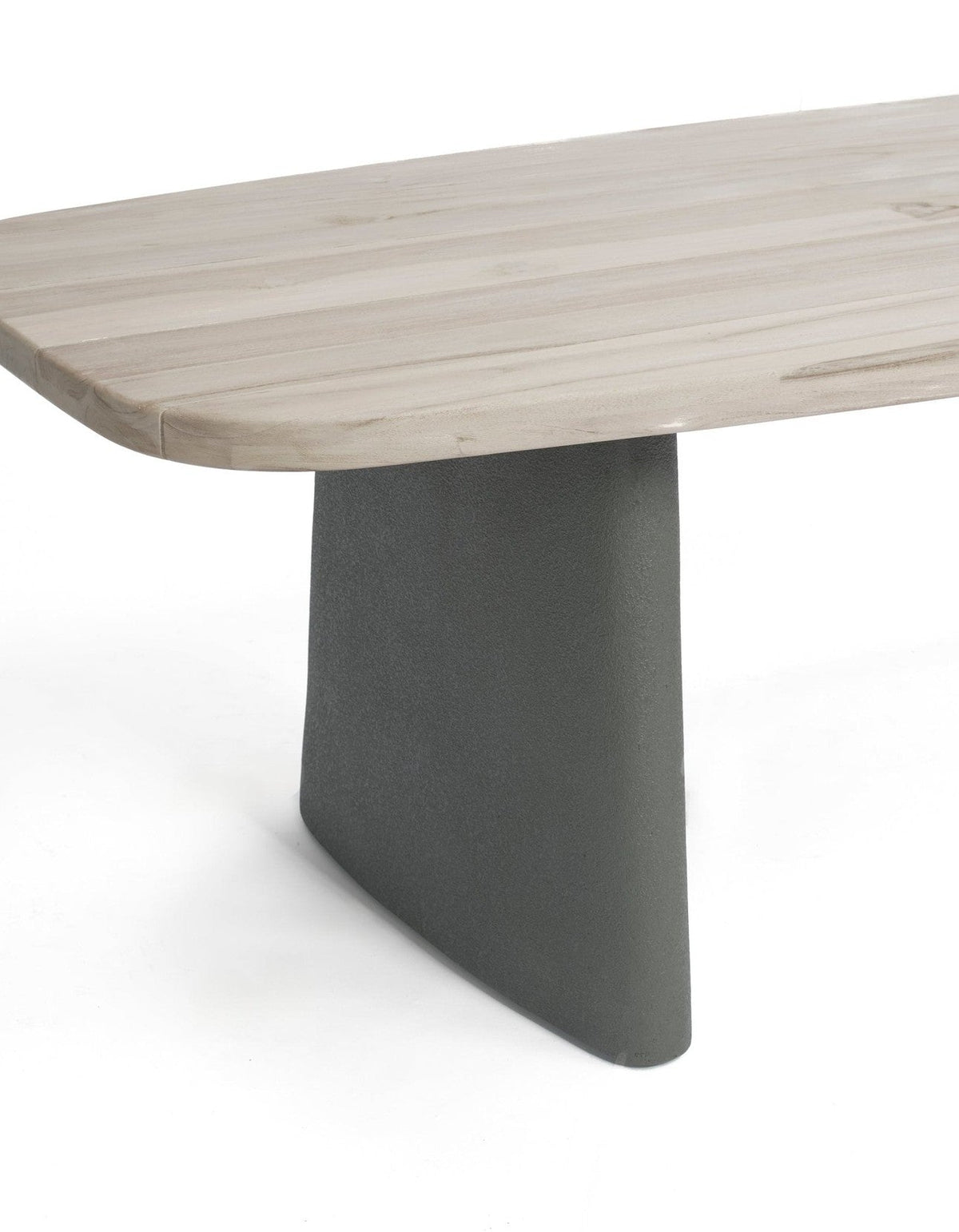
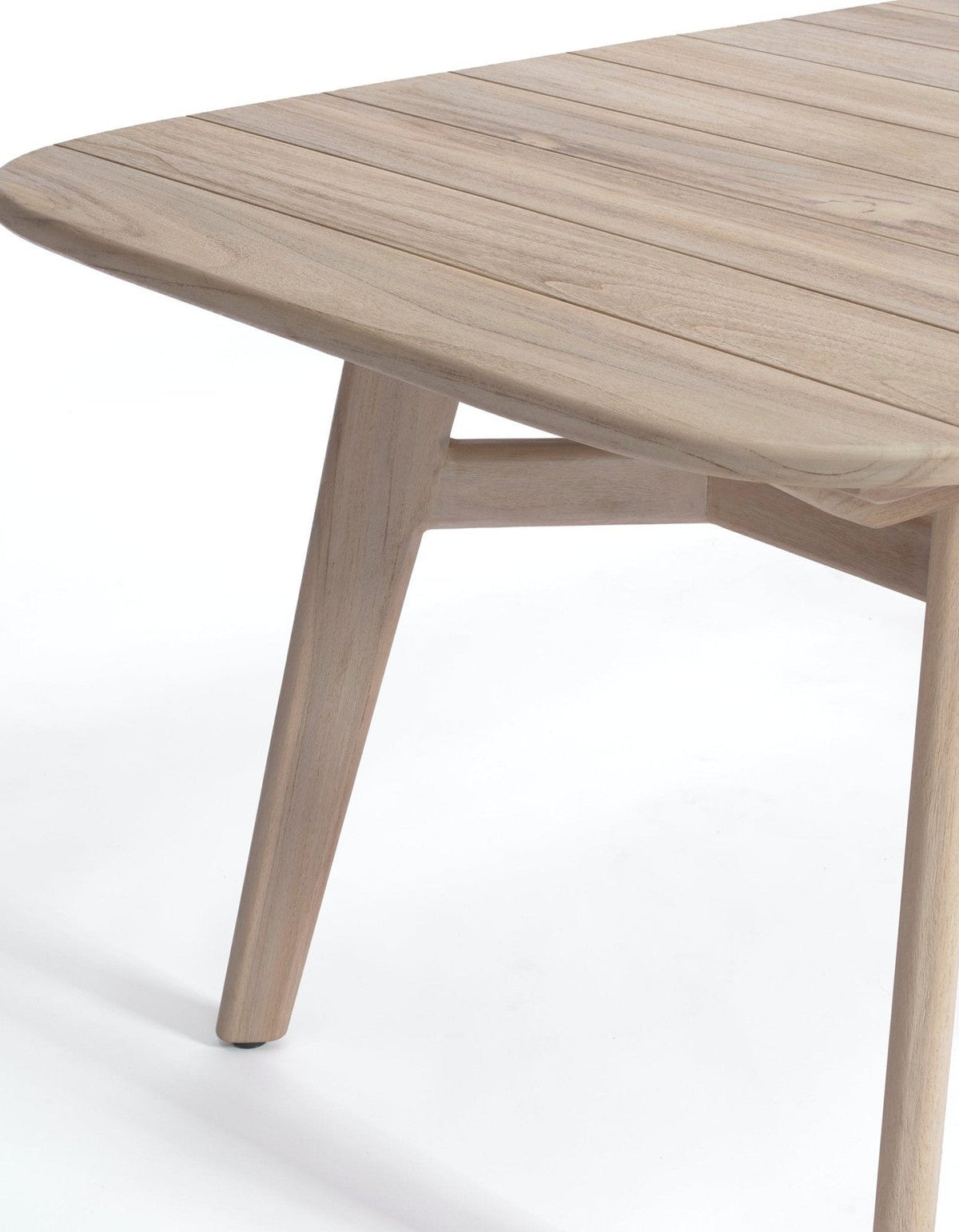
Joinery. Quality teak furniture is built with mortise and tenon joints, reinforced with dowels or marine-grade fittings. Look underneath.
Thickness and weight. Teak is dense. A dining table in A-grade teak is genuinely heavy.
Grain and colour. Fresh A-grade teak is an even honey gold with a slightly oily feel.
Fittings. Any metal components should be marine-grade aluminium or stainless steel.
How teak behaves in Australian conditions
Australian UV is severe by world standards, and teak handles it better than almost anything else you can put outside. Left natural, the surface will gradually soften from honey gold to a pale silver grey over six to twelve months. Many of our clients, and most designers we work with, prefer the silvered look; why teak silvers explains the change and how to reverse it if you ever want to.
What teak furniture should cost
A genuine A-grade teak dining table typically sits in the low thousands and up, and a teak sunlounge from the mid hundreds into the low thousands. When you see "teak" priced dramatically below that, you are usually looking at thin sections, lower grades or hybrid construction.
Questions to ask any retailer
What grade of teak is this, and will you put that in writing?
How are the joints constructed?
What metal are the fittings?
What does the warranty cover, for how long, and does it cover commercial use? At Sissonne Outdoor it's a 24-month manufacturer's warranty for domestic use, excluding fair wear and tear; commercial use is assessed case-by-case.
Can I see the timber in person?
That last one matters. Our showrooms in Hawthorn (Melbourne) and Southport (Gold Coast) exist because photographs cannot communicate the weight and feel of A-grade timber.
FAQ
Is teak the best material for outdoor furniture in Australia? For timber, yes. Marine-grade aluminium is the leading alternative where weight or a different aesthetic is preferred.
How long does teak outdoor furniture last? Quality A-grade teak furniture routinely lasts 25 years or more outdoors with minimal care.
Does teak furniture need to be oiled? No. Oiling is purely an aesthetic choice.
Why is teak furniture expensive? A-grade teak comes only from the mature heartwood of slow-grown trees, and proper mortise and tenon construction is labour intensive.