Why Teak Silvers, and Why That Is a Feature
The phone call we get every spring
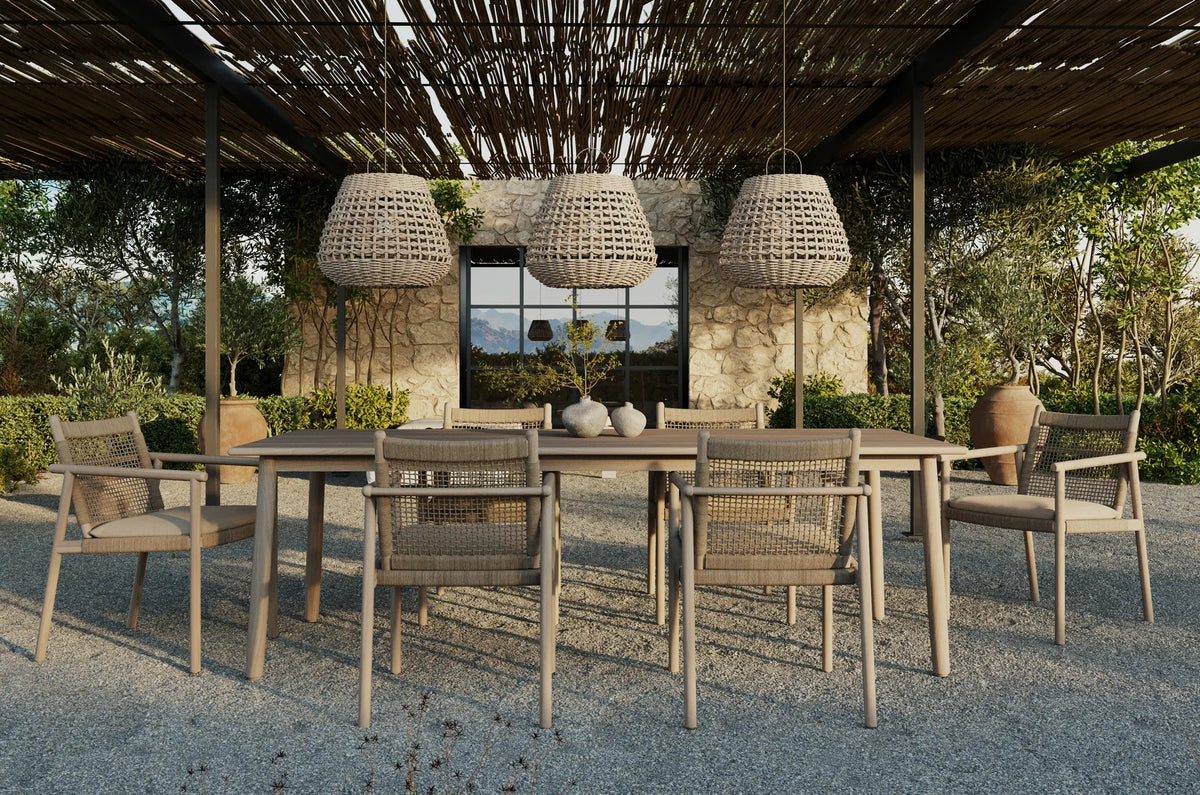
A client buys a golden teak dining setting in November. By the following winter it has begun to pale, and by the next summer it is a soft silver grey. Some clients call worried that something has gone wrong. Nothing has. Their furniture is doing exactly what teak has done on boat decks for four hundred years.
What is actually happening
Teak's surface contains natural oils and lignin, the compound that binds timber fibres and gives fresh teak its warm colour. Ultraviolet light breaks down the lignin in the top few microns of the surface, and rain gradually washes the loose grey fibres away, leaving a fine silvery patina.
Two things matter here. First, microns: the change is shallower than a coat of paint. Second, surface: the timber underneath remains golden, dense and structurally untouched. Plane a few microns off a ten-year-old silvered table and you will find fresh gold beneath.
Why designers often prefer it
It cannot be faked or rushed. Silvered teak signals time and permanence.
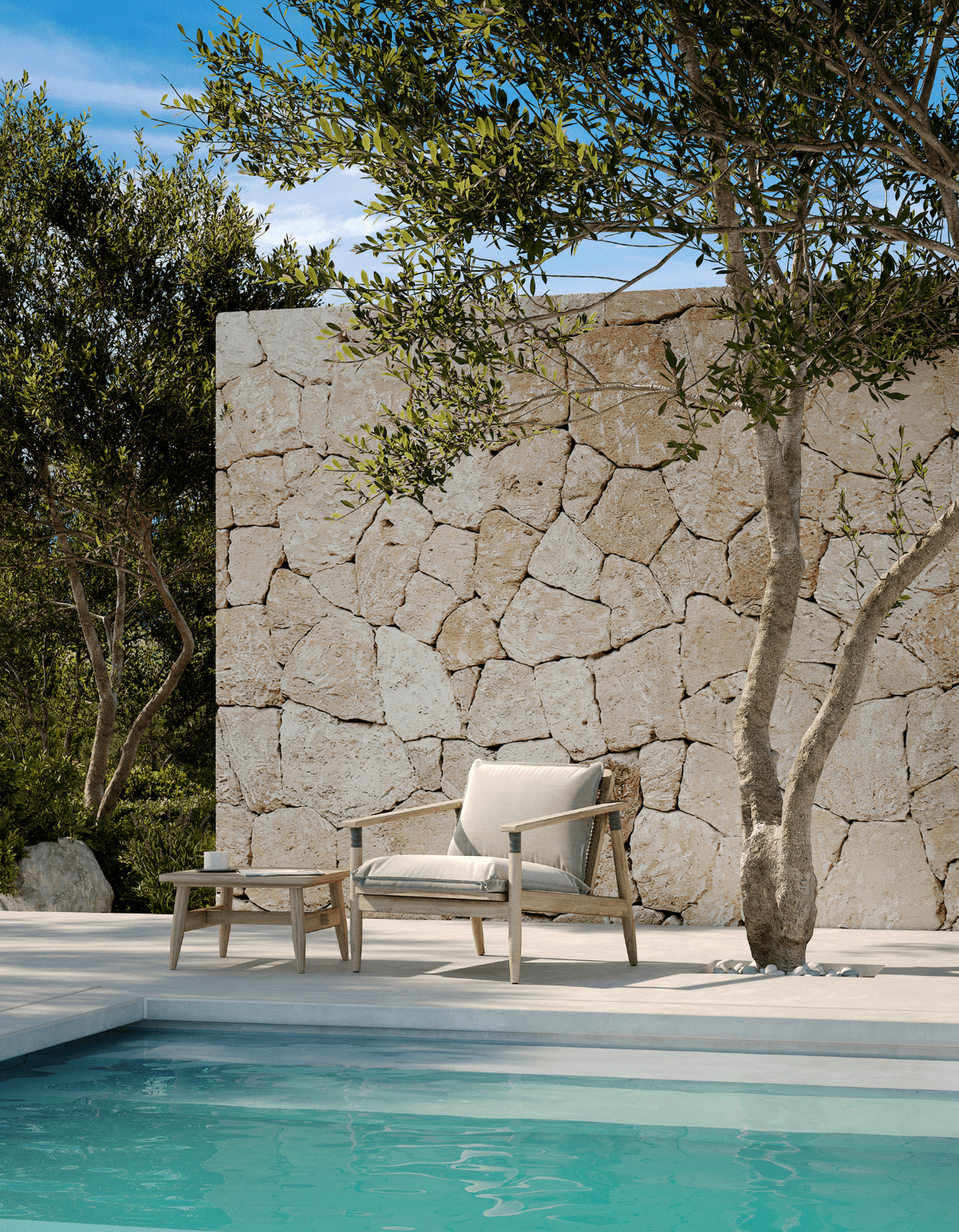
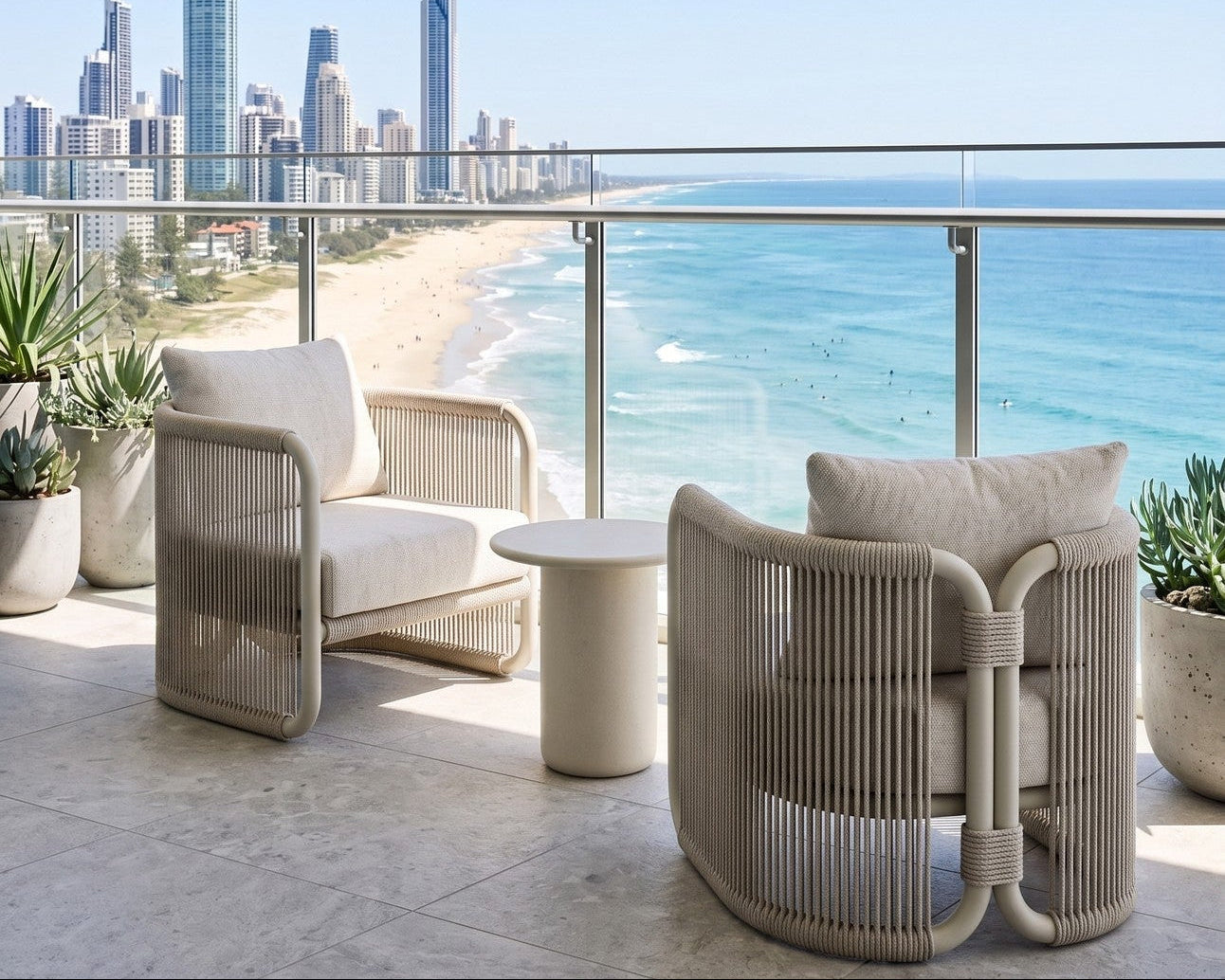
It flatters coastal palettes. Silver grey against white render, limestone, pale decking and ocean light is one of the most reliable combinations in outdoor design.
It is zero-maintenance beauty. The silvered state is stable.
If you prefer the gold
Regular oiling or sealing from day one, reapplied once or twice a year. Our guide on whether to oil teak weighs this up honestly; the short version is that our Teak Protector Kit holds the honey tone longer than oil, but either way you are committing to the routine.
Periodic restoration. Let the piece silver, then clean and lightly sand when you want the gold back for a season. Our teak restoration guide covers the full method.
What we advise against is the anxious middle path: oiling once, forgetting, and ending up with patchy half-silvered timber. Pick a lane.
Telling silvering apart from real problems
Small surface checks (hairline cracks) are a separate, normal seasonal behaviour as the timber breathes, unrelated to the colour change.
Grey patina is even and dry. Black spotting in damp shaded corners is mildew, which washes off with an oxygen-based cleaner.
Strength is unaffected either way.
Every piece in our A-grade teak range is chosen to silver evenly; see it at either stage, golden or silvered, in our Hawthorn and Southport showrooms.
FAQ
Why is my teak furniture turning grey? UV light breaks down lignin in the top few microns of the timber surface, creating a silver grey patina. It is natural, cosmetic only, and does not affect the strength or lifespan of the furniture.
Can I stop teak from going grey? Yes, by oiling or sealing regularly from new. This is purely aesthetic and commits you to reapplication once or twice a year.
Can silvered teak be restored to golden? Completely. A proper clean and a light sand removes the thin weathered layer and reveals fresh golden timber beneath.
Is grey teak damaged teak? No. Silvering is a surface patina a few microns deep. The timber underneath remains golden and structurally sound for decades.