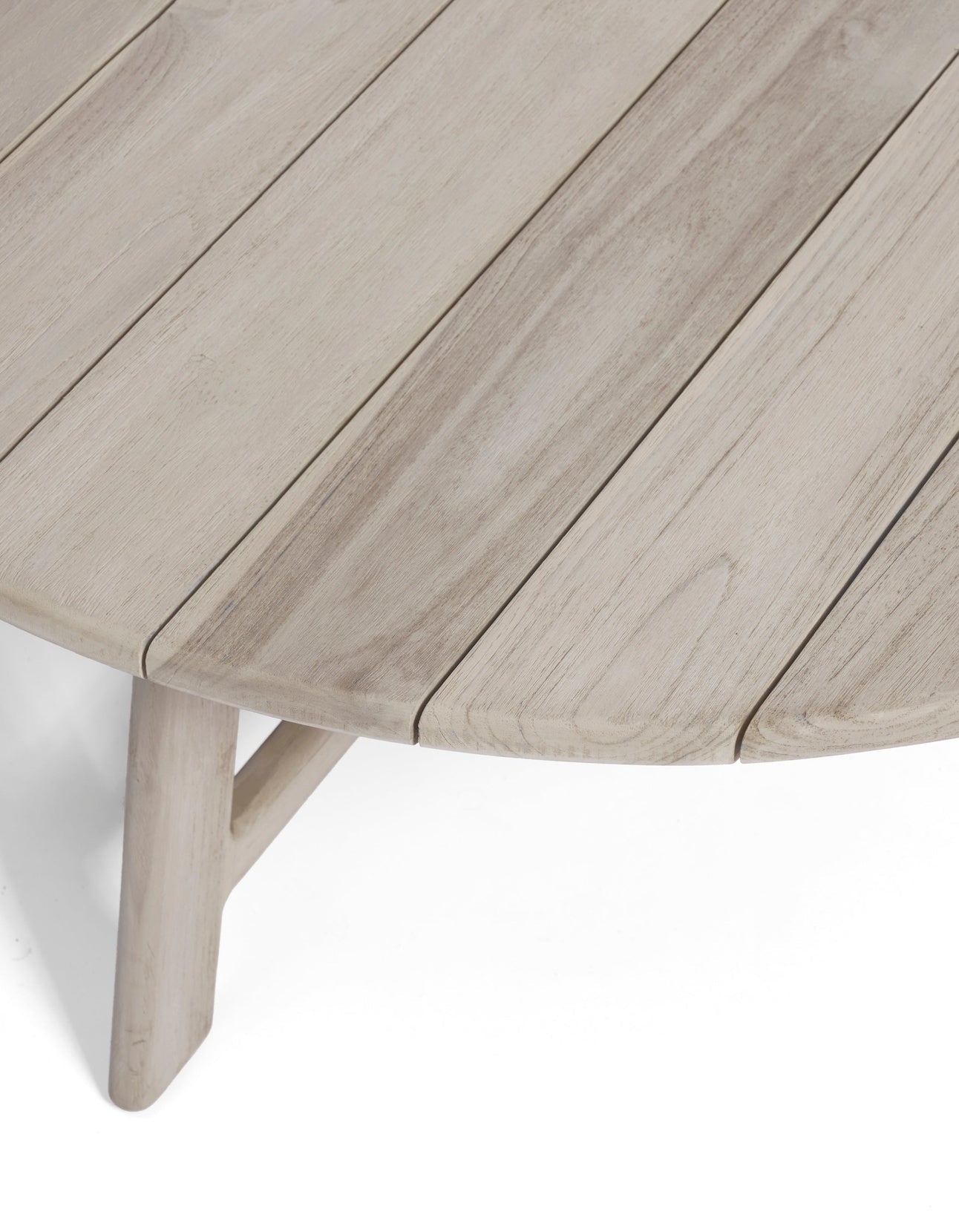
A-Grade Teak vs Reclaimed Teak: What the Grade Actually Means
- A-Grade teak is cut from the heartwood of a mature tree, the dense, oil-rich centre with tight grain and natural weatherproofing
- Reclaimed teak is salvaged from old structures and can range from exceptional to poor depending on source
- The grade refers to where in the tree the timber is cut from, not just how it's processed, lower grades include sapwood, which is significantly less durable outdoors
- Both A-Grade and well-sourced reclaimed teak outperform timber labelled simply as "solid teak" with no grade specified
- Sissonne uses plantation-grown A-Grade teak, traceable, FSC-aligned, and cut to specification
Walk into any outdoor furniture showroom in Australia and you'll see teak everywhere. But "teak" covers a spectrum far wider than most buyers realise, from plantation-grown A-Grade heartwood that will outlast the deck it sits on, to sapwood off-cuts dressed up in the same packaging. Understanding the grade is the most useful piece of knowledge you can have before buying a teak outdoor setting.
What is A-Grade teak?
The grading of teak refers to which part of the tree the timber is cut from, not a processing standard or marketing designation. A teak tree has two distinct zones in cross-section:
- Heartwood, the dense, dark, oil-rich core of a mature tree. High natural oil content repels moisture, resists insects and prevents rot. Tight, even grain. This is A-Grade.
- Sapwood, the lighter outer rings that transport nutrients when the tree is alive. Much lower oil content and significantly less durable outdoors. Cream to pale yellow in colour and will check, rot and absorb moisture at a rate heartwood won't.
A-Grade teak should contain only heartwood, or heartwood with a minimal specified percentage of sapwood. B-Grade and C-Grade include progressively more sapwood, which is why they're cheaper, and why they perform differently over time.
What is reclaimed teak?
Reclaimed teak is timber salvaged from demolished or decommissioned structures, bridges, railway sleepers, building frames, boats, or industrial buildings. Quality varies enormously by source:
- Old-growth reclaimed teak from pre-plantation trees (80–150 years old at harvest) can have extraordinarily tight grain and high oil content, often superior to plantation-grown wood
- Structural salvage from industrial buildings may include lower-grade teak, treated timber or contaminated wood needing significant processing
- Character markings, nail holes, weathered surfaces, saw marks, are part of the aesthetic and not defects in well-selected stock
The challenge with reclaimed teak as a buyer is verification. Unlike plantation A-Grade, which comes with documented sourcing, reclaimed stock is harder to trace. Quality depends almost entirely on the supplier's sourcing standards.
How does A-Grade plantation teak compare to reclaimed teak in practice?
For uniformity and finish: Plantation A-Grade wins. Cut to specification from timber of consistent age and grade, the grain, colour and surface are predictable. This matters for furniture with matched panels, tight joinery or a consistent finished colour.
For character and history: Well-sourced reclaimed teak has a visual richness that plantation-grown teak doesn't. Variation in grain, natural silver patina from years outdoors, subtle marks of its previous life, these are genuinely beautiful in the right application.
For sustainability: Both can be responsibly sourced. Plantation A-Grade grown to FSC standards uses managed forestry. Reclaimed teak reuses material that already exists, no new trees required. The sustainability concern with reclaimed is contamination and the sourcing conditions under which original structures are demolished.
For durability: Both, when properly graded and sourced, will last decades outdoors in Australian conditions with standard care.
Why does Sissonne use plantation-grown A-Grade teak?
We chose plantation A-Grade teak for four reasons:
- Consistency. Our furniture is designed to specific tolerances, joinery on a dining table requires timber that performs predictably in cutting, finishing and expansion.
- Traceability. Our supply chain is documented from plantation to workshop. We can verify grade, origin and forestry standards.
- Responsible forestry. Plantations we source from are managed under standards aligned with FSC principles, replanting, controlled harvesting, no old-growth clearing.
- Performance guarantee. When we back furniture with a structural warranty, we need to know the material will perform as specified.
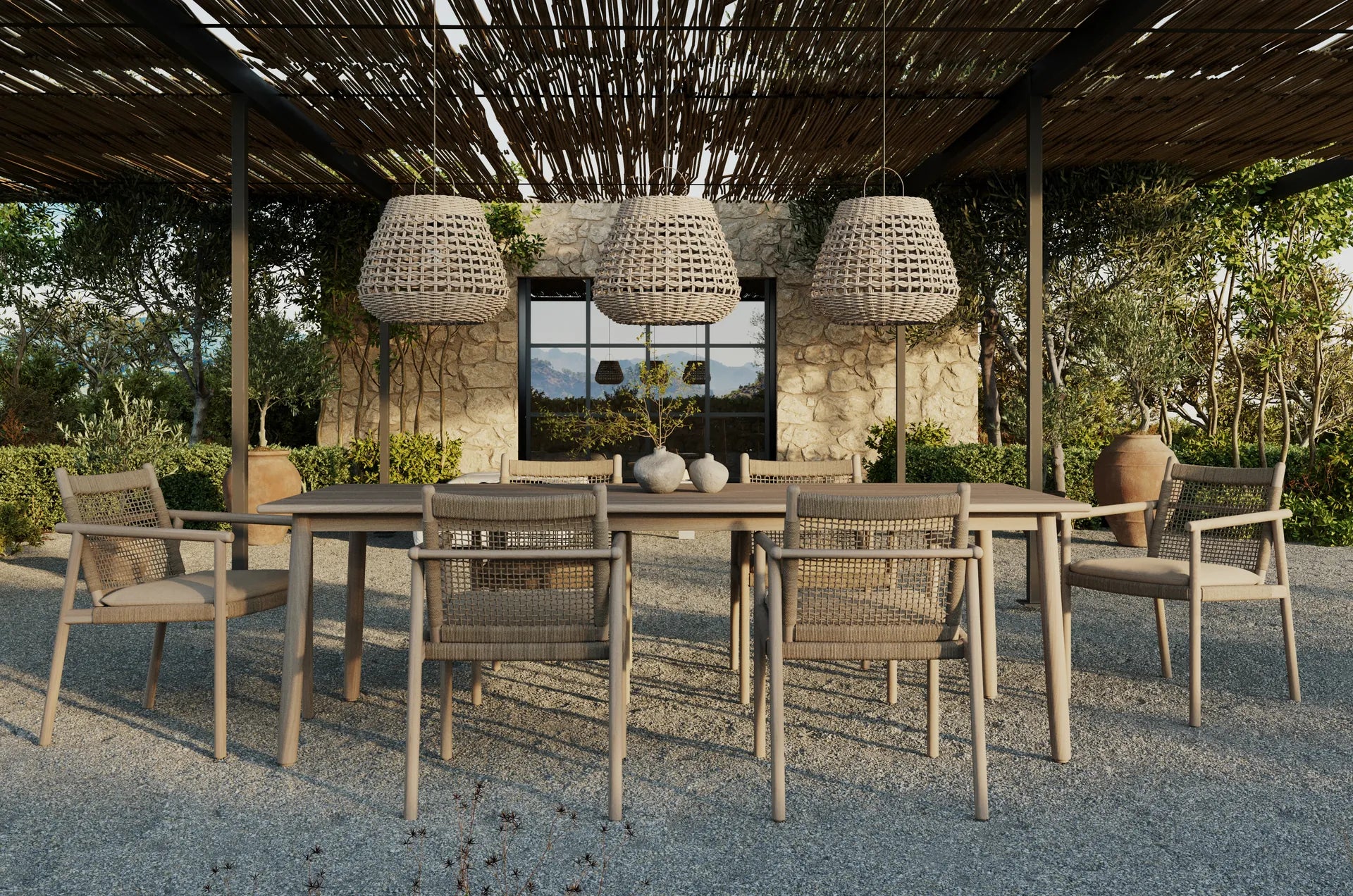
See the result across our teak outdoor furniture range, from the Gordon and Eden Dining Tables to the Blueys Sunlounge and Daintree Lounge Chair.
How can I tell what grade of teak I'm buying?
- Ask for the grade and source directly, a supplier who can't answer is a red flag
- Look at end grain if visible: tight concentric rings and warm golden-brown to dark brown indicate good heartwood content; pale or creamy patches indicate sapwood
- Ask for forestry certification documentation, FSC, SVLK or equivalent
- If a price seems very low for "solid teak," it almost certainly involves significant sapwood content or a lower-grade timber mislabelled
Frequently asked questions
Is A-Grade teak worth the extra cost?
Yes, for outdoor furniture used long-term. The oil content and grain density of A-Grade heartwood are the properties that make teak naturally weatherproof, insect-resistant and structurally stable outdoors. Lower-grade teak with significant sapwood will show checking, discolouration and joint failure far earlier.
How do you tell A-Grade teak from lower grades visually?
In a finished piece, it can be difficult. Clearest indicators: tight end-grain rings, golden to dark brown colour, uniform colour across all surfaces, and significant weight (A-Grade heartwood is dense). Pale or creamy streaks indicate sapwood content.
Does reclaimed teak need different care to plantation teak?
The care principles are the same, clean with mild soap and water, oil annually to maintain colour (we recommend Golden Care), allow to silver naturally if preferred. Reclaimed teak may have more surface variation that makes oiling slightly less uniform in appearance, which many consider part of the material's character.
What does FSC-certified teak mean?
FSC (Forest Stewardship Council) certification means the timber comes from a forest managed to standards protecting biodiversity, worker rights and long-term forest health. It's the most widely recognised global standard for responsible forestry and the benchmark we use when evaluating plantation partners.