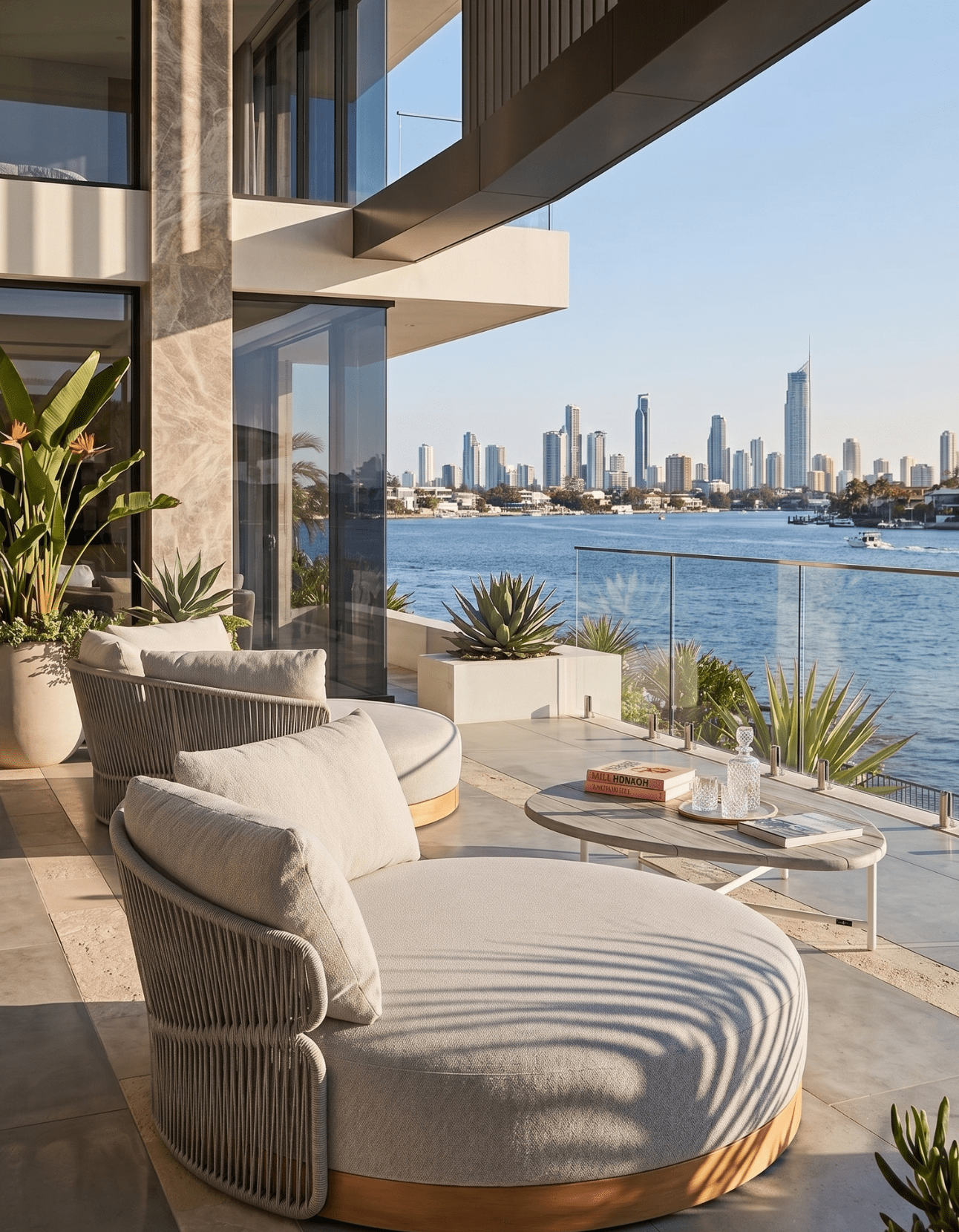
Outdoor Furniture for Australian Coastal Homes: What Materials Actually Last
- Salt air is the single biggest accelerant of outdoor furniture failure, it degrades powder coats, oxidises metals and breaks down lower-quality finishes within a season
- Marine-grade powder-coated aluminium and A-Grade teak are the two materials with the best documented track record for permanent coastal installation in Australia
- Stainless steel hardware (grade 316, not 304) is essential for fasteners and fittings on coastal furniture
- Synthetic rope rated for marine environments resists UV and salt far better than natural fibres or standard outdoor rope
- Cushion fabric should be solution-dyed, not surface-printed, salt and UV together bleach surface-dyed fabrics within one to two summers
Coastal living in Australia is extraordinary. But the same environment that makes it special, salt air, intense UV, humidity and sea spray, is exceptionally harsh on outdoor furniture. The wrong materials will look tired within a summer and structurally compromised within three years. The right ones will still be performing a decade in, with only basic maintenance.
Here's what actually matters when you're furnishing an outdoor space within a few kilometres of the coast.
Why does salt air damage outdoor furniture faster?
Salt is hygroscopic, it actively draws and holds moisture. In a coastal environment, salt particles settle on every surface from the air. On metal, this creates an electrochemical environment that accelerates corrosion. On powder-coated finishes, salt that penetrates any chip or micro-crack allows moisture to get under the coat and cause delamination, the bubbling and flaking you see on coastal outdoor furniture that looked fine in a showroom. On fabric, salt crystals abrade fibres and draw UV damage deeper into the material.
What is marine-grade powder coat and why does it matter?
Not all powder coats are equal. Marine-grade powder coat refers to a formulation and application process specifically designed to resist salt, humidity and UV at levels higher than a standard architectural or decorative powder coat. It typically involves a thicker application (60–80 microns), chromate or similar conversion coating on the aluminium substrate before coating, and a UV-stable polyester or PVDF resin in the powder itself.
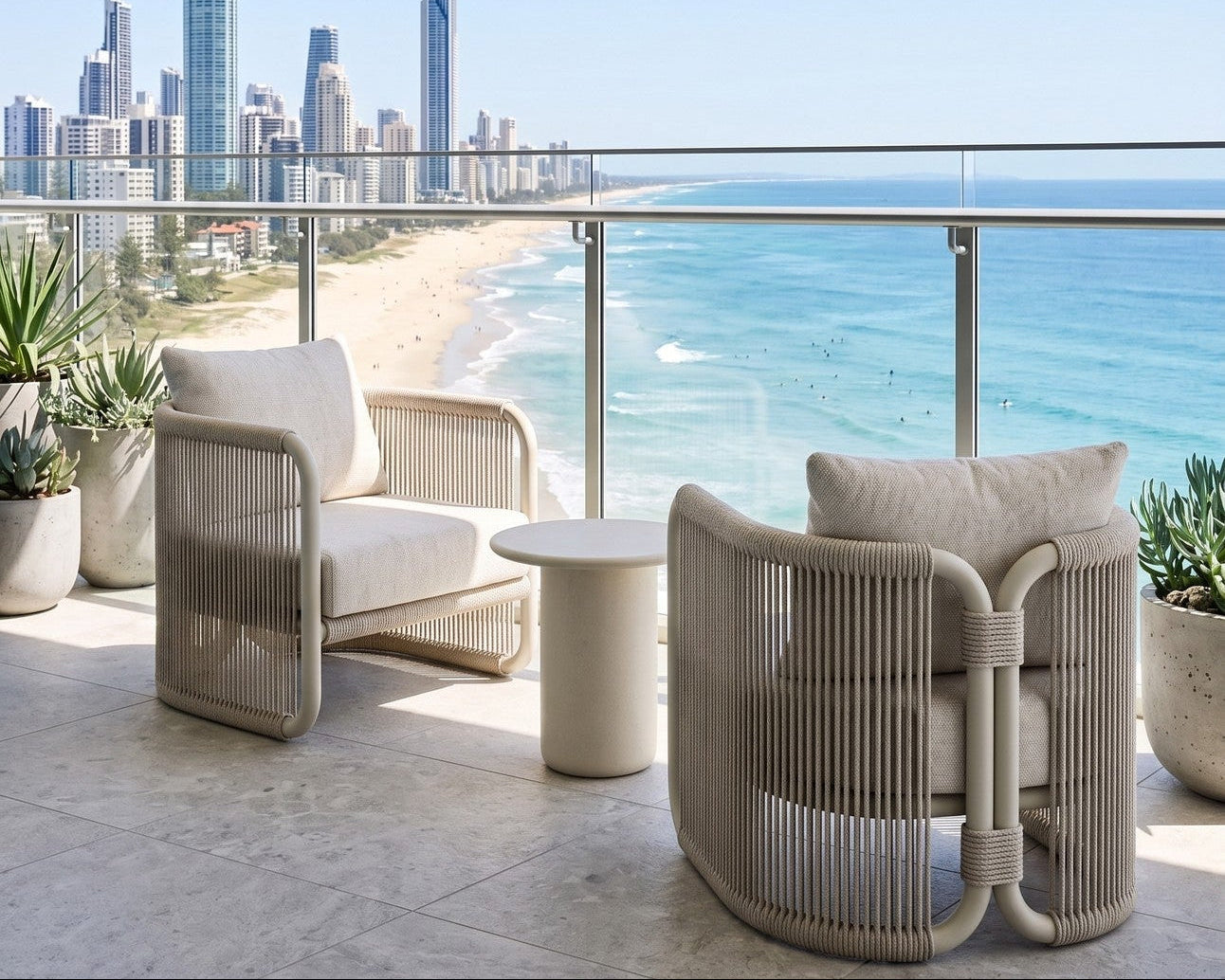
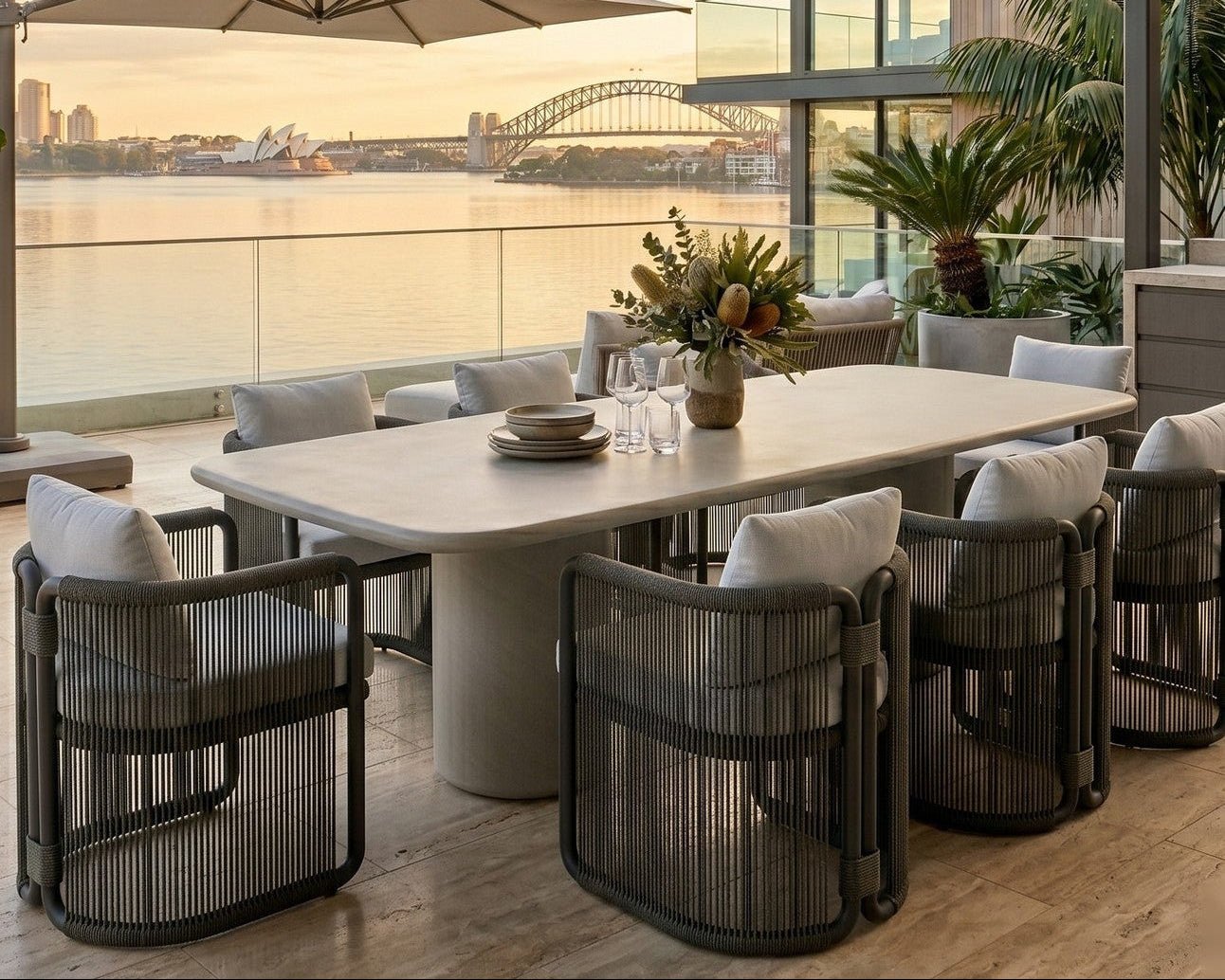
All aluminium frames in the Sissonne aluminium range are finished to a marine-grade specification. This is not a marketing term for us, it's a specific requirement we set and verify with our manufacturing partners.
Is teak good for coastal outdoor furniture?
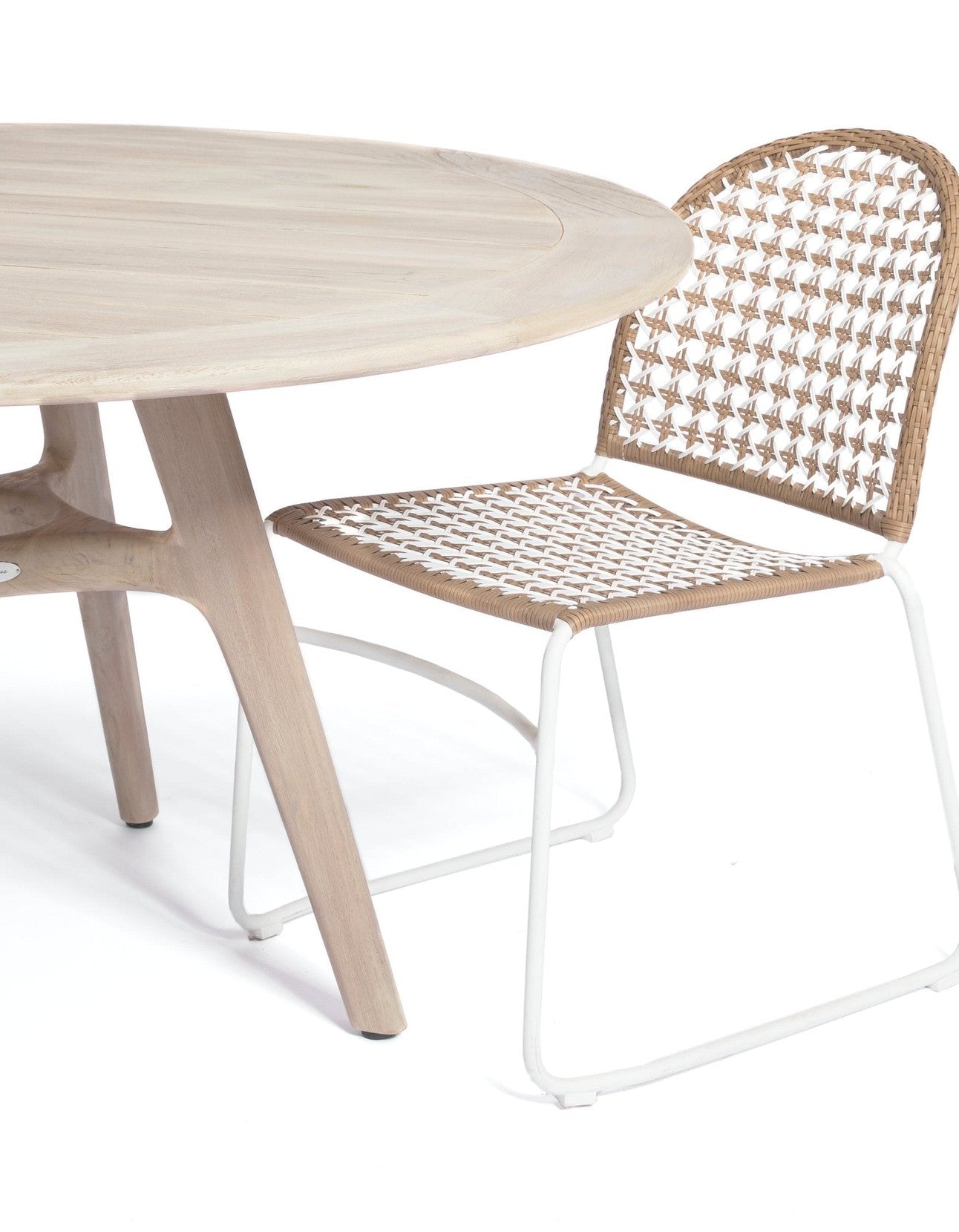
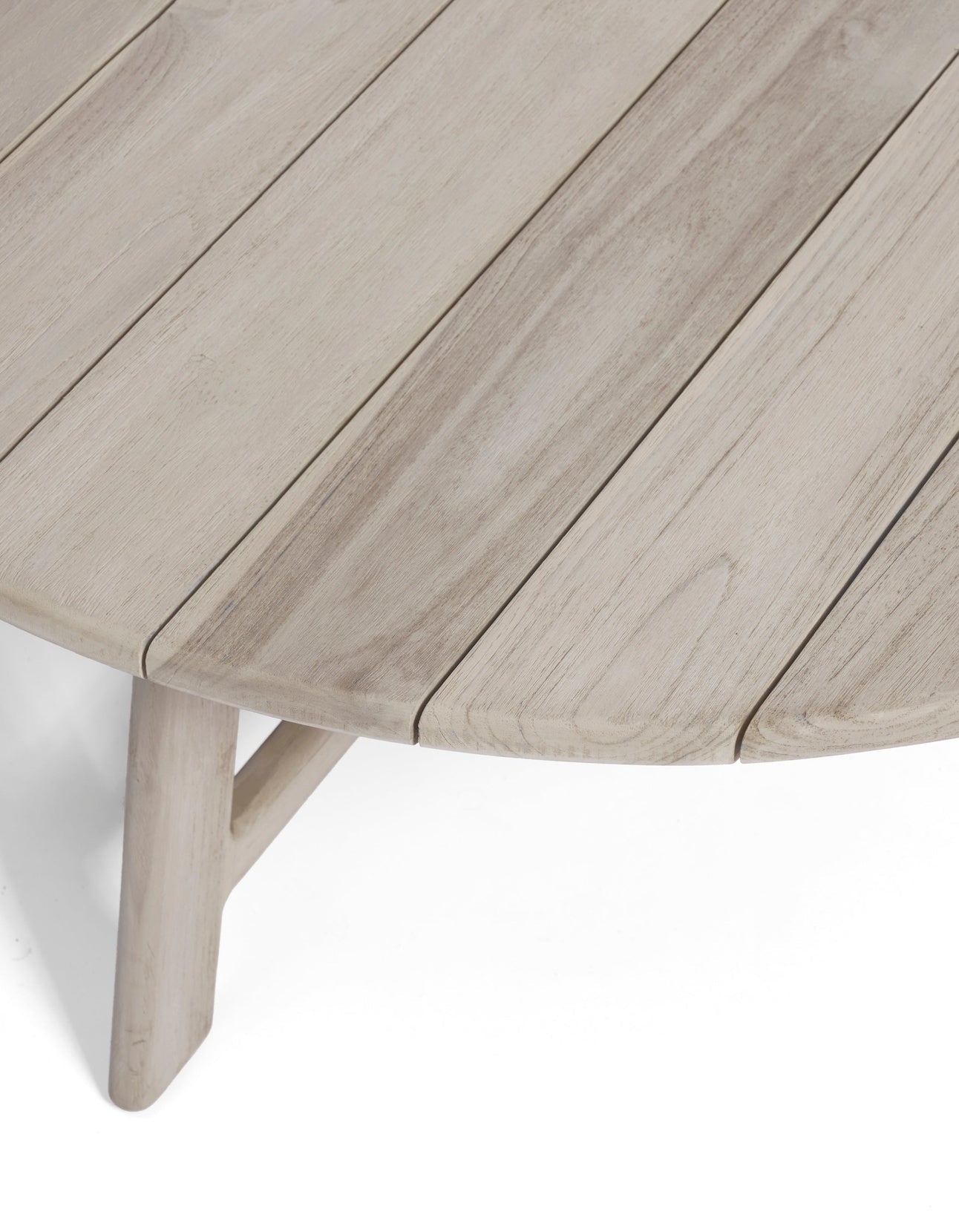
A-Grade teak is exceptionally well-suited to coastal environments. Its high natural oil content repels moisture, resists salt and is structurally stable in high-humidity conditions. Teak has a documented history of use in marine applications, boat decks, dock furniture, naval vessel fittings, specifically because of these properties.
What matters in a coastal setting is the grade. A-Grade heartwood teak performs as described. Lower grades with significant sapwood content will check, discolour and absorb moisture far faster than the heartwood, particularly in the humid, high-salt conditions of coastal Australia.
Browse our teak outdoor furniture collection, all pieces use A-Grade heartwood.
What should I look for in outdoor fabric for a coastal home?
Two things matter most:
Solution-dyed, not surface-printed or piece-dyed. In solution-dyed fabric, the colour is part of the fibre itself, it doesn't sit on the surface where UV and salt can bleach it away. Sunproof® acrylic, which we specify for all Sissonne cushions, is solution-dyed and rated for coastal UV exposure.
Mould and mildew resistance. Coastal humidity creates conditions where mould colonises fabric quickly. Sunproof® has inherent mould and mildew resistance as part of its composition, not a surface treatment that washes off.
What about stainless steel, wrought iron and other metals?
For coastal settings:
- Grade 316 stainless steel, excellent. The molybdenum content specifically improves chloride resistance. Use this for any hardware, fasteners or frames used near the coast.
- Grade 304 stainless steel, adequate for mild coastal exposure but will show surface rust (not structural, but unsightly) in direct salt air within a few years.
- Powder-coated steel, not recommended for coastal permanent outdoor use. Rust will begin at any chip and spread under the coat.
- Wrought iron, requires aggressive maintenance (sealing, painting) in coastal environments and is generally unsuitable for set-and-forget outdoor installation near the coast.
- Aluminium (uncoated), forms a stable oxide layer and doesn't rust, but the chalky surface degradation from coastal UV exposure is unsightly. Marine-grade powder coat addresses this.
How often does coastal outdoor furniture need maintenance?
With the right materials, less than you'd expect:
- Aluminium frames: Monthly rinse with fresh water removes salt build-up. Annual wipe-down with mild soap. No other treatment required.
- A-Grade teak: Annual oiling to maintain colour (or allow to silver naturally, both are valid). Clean with mild soap and water before oiling. We recommend Golden Care for teak maintenance.
- Sunproof® cushions: Brush off salt and debris monthly. Spot clean as needed. Apply fabric protector spray at the start of each summer.
For a full material-by-material maintenance schedule, see our complete outdoor furniture care guide.
Frequently asked questions
What outdoor furniture is best for a beach house in Australia?
Marine-grade powder-coated aluminium and A-Grade teak are the benchmark materials for permanent coastal installation. Both have strong track records in Australian coastal conditions, aluminium for its corrosion resistance, teak for its natural weatherproofing and oil content. Pair with Sunproof® solution-dyed acrylic cushions and grade 316 stainless steel hardware in any fasteners.
Can outdoor furniture be left outside year-round in a coastal climate?
A-Grade teak and marine-grade powder-coated aluminium are designed for permanent outdoor installation, including coastal climates. Cushions benefit from being stored inside during extended wet periods or brought indoors if you're away for weeks at a time.
How do I remove salt from outdoor furniture?
A thorough rinse with fresh water removes most salt deposits from frames. For cushion fabric, a gentle brush followed by a rinse is sufficient. For teak, salt residue can be removed with a mild soap-and-water scrub along the grain before rinsing. Don't use high-pressure hoses on teak, the pressure can raise the grain.