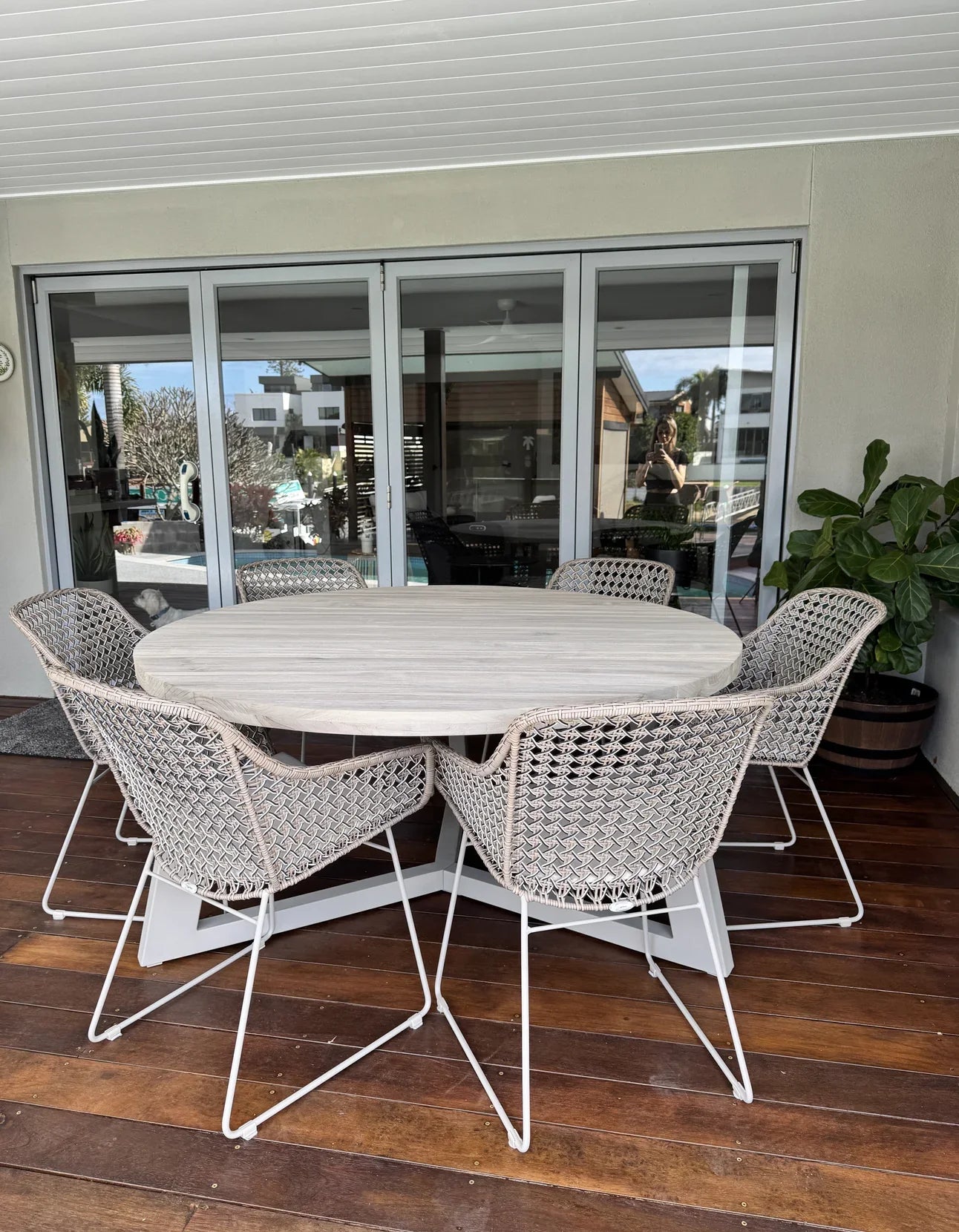
How to Choose an Outdoor Dining Setting for an Australian Home
- Outdoor dining furniture in Australia must handle UV, rain, extreme temperature variation and, in many locations, coastal salt air
- Table size is the first decision: allow 60–70 cm of table width per diner, and at least 90 cm clear space from the table edge to any wall or step for chairs to be pulled out
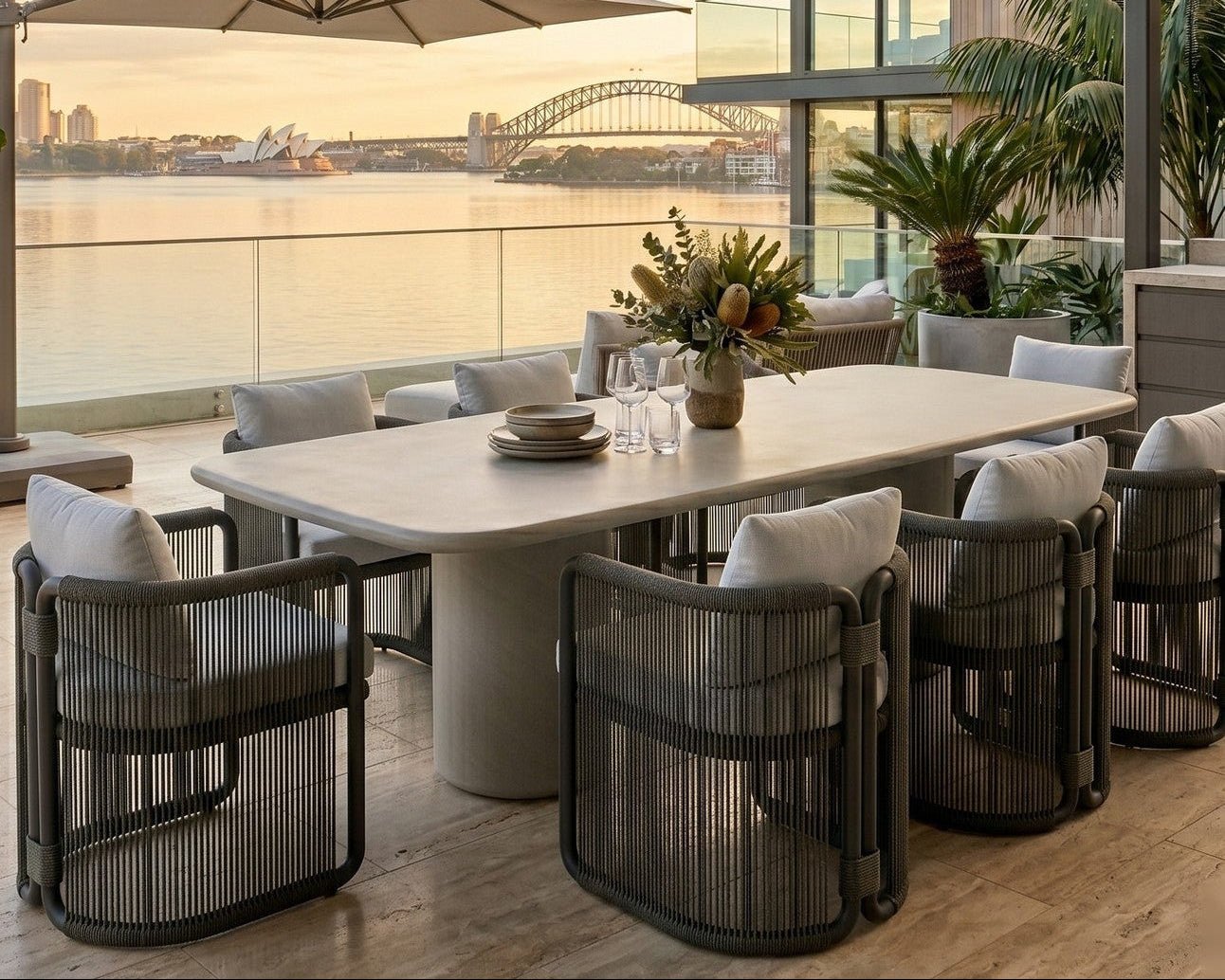
- For 6–8 people: a 2.1–2.4 m rectangular table. For 4–6 people: a 1.6–1.8 m rectangular or 1.2 m round table
- Dining chairs with arms work well at the heads; armless chairs allow tighter spacing along the sides
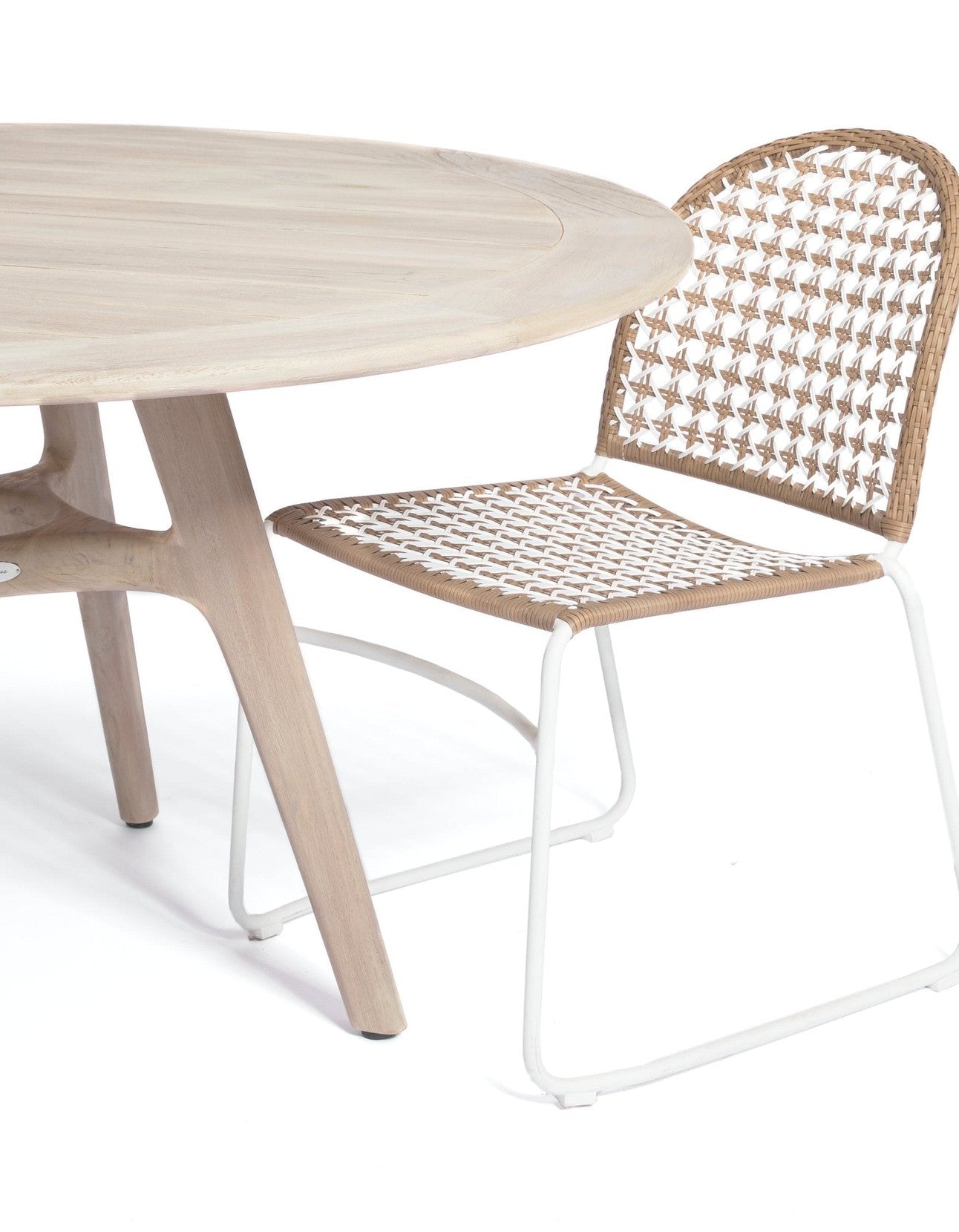
- Teak and powder-coated aluminium dining furniture both perform well in Australian outdoor conditions when properly specified
An outdoor dining setting is one of the most used pieces of furniture in an Australian home, and one of the most consequential to get right. Too small and it limits how you entertain. Too large and it dominates the space. Wrong material and it looks tired within two summers.
This guide takes you through the key decisions in order: size first, then material, then seating, then style.
What size outdoor dining table do I need?
Table size is a function of two things: how many people you typically seat, and how much space you have around the table for chairs.
Per-diner allowance: 60–70 cm of table width per person seated is the comfortable standard for outdoor dining. More narrow than 60 cm feels cramped with large outdoor dinnerware; more than 70 cm starts to feel conversationally distant across a table without a centrepiece.
Clearance around the table: Allow at least 90 cm from the edge of the table to any wall, step, railing or planter for chairs to be pulled out and for people to walk behind seated guests. 120 cm is more comfortable if traffic flows regularly behind the seats.
As a result:
- 4 people: 1.2 m round table or 1.4 m rectangular table
- 6 people: 1.6–1.8 m rectangular table or 1.2 m round extending to 1.6 m
- 8 people: 2.1–2.4 m rectangular table; an extending table that goes from 1.8 m to 2.4 m gives flexibility
- 10 or more: 2.4–3.0 m table, or two matching tables arranged end-to-end
Browse our outdoor dining tables collection with dimensions for each piece.
What are the best outdoor dining table materials for Australia?
The two materials with the best performance record for Australian outdoor dining tables:
A-Grade teak: Natural weatherproofing, UV-stable, dimensionally stable through temperature variation, warm and tactile. Requires annual oiling to maintain the golden colour, or can be left to silver naturally. See the teak grade guide for what to look for.
Marine-grade powder-coated aluminium: Lightweight (easier to move for entertaining), available in any colour, virtually no maintenance beyond periodic rinsing, excellent coastal performance. Tabletop often combined with teak, glass or Corian slats for aesthetics.
Materials to be cautious about for permanent outdoor dining use in Australia: untreated softwood, painted MDF, uncoated steel (not stainless), and natural fibre weaving on tabletops.
How should I choose outdoor dining chairs?
A few considerations specific to outdoor dining:
Arms vs armless: Chairs with arms at the table heads read as more formal and are easier to get in and out of. Armless chairs along the sides allow more people to fit and stack more easily. Many settings use armed carver chairs at each end with armless chairs along the sides.
Seat height: Standard dining chair seat height is 45–48 cm. Confirm this against your table height, standard outdoor dining table height is 74–76 cm, giving comfortable 26–30 cm clearance between seat and tabletop underside.
Stackability: For large gatherings or entertaining versatility, stackable dining chairs store more efficiently. Many of our aluminium and aluminium-rope chairs are designed to stack for storage.
See the outdoor dining chairs collection for all available options and dimensions.
Round vs rectangular outdoor dining tables: which is better?
Round tables promote conversation, everyone faces everyone else and there's no head of the table. They work particularly well for groups of 4–6 where the social dynamic is the priority. The limitation is that they scale poorly above 6 people: a round table for 8 or more becomes physically large (1.4 m+ diameter) and hard to seat without a large square footprint.
Rectangular tables are more flexible for larger groups, suit longer narrower spaces, and are more natural for families where children sit along one side. An extending rectangular table, with a leaf or butterfly extension, is often the most practical choice for households that both entertain large groups and use the table daily for smaller family meals.
Frequently asked questions
How do I choose between 6-seater and 8-seater outdoor dining?
Buy for one size larger than your regular use. If you regularly dine outside with 4, buy a 6-seater. If you regularly host 6, buy an 8-seater. Extra chairs can always be stored; undersized seating is a constraint every time you entertain above capacity.
Can outdoor dining chairs be left outside in the rain?
A-Grade teak and powder-coated aluminium chairs are designed for permanent outdoor installation. Cushions should be brought inside during sustained rain or stored in a breathable bag. A seat without cushions dries quickly; a saturated cushion takes considerably longer and is more likely to develop mould if left uncovered.
What outdoor dining setting is best for a covered alfresco area?
In a covered space, the UV and rain exposure that drives material selection outdoors is reduced, but temperature variation, humidity and occasional wind-driven rain still apply. Teak and aluminium both perform well. The bigger consideration in a covered alfresco is often proportion: a covered space has a ceiling that limits visual scale, so an extending table or round table can feel more appropriate than a very long rectangular table in the same footprint.