The Best Outdoor Lounge Chairs for Australian Homes: A Buyer's Guide
- An outdoor lounge chair that you'll actually sit in for more than ten minutes needs back support, seat depth and arm height that work together, not just visual appeal
- Standard outdoor lounge chair seat height is 35–45 cm; lower (30–35 cm) for a more relaxed daybed-adjacent feel; higher (44–48 cm) if you have mobility considerations
- For Australian conditions, the frame material and fabric matter more than in milder climates, UV intensity and temperature variation are significantly higher here
- A chair in the right proportion for a single person needs 65–75 cm of width, narrower reads as decorative rather than genuinely comfortable
- The best outdoor lounge chair for your space is the one you'll move outside in a year because it still looks great, not the one you'll discard
An outdoor lounge chair is one of the hardest pieces of furniture to buy well, because it has to do two things simultaneously: look right in a space, and actually be comfortable to sit in for extended periods. Most people underweight comfort in the selection process and overweight appearance.
This guide takes you through what to actually evaluate, beyond what a piece looks like in a product photo.
What makes an outdoor lounge chair comfortable for extended sitting?
A lounge chair that's comfortable for ten minutes of casual sitting and comfortable for an hour of reading are different propositions. What matters for extended sitting:
Seat depth: 50–60 cm is the comfortable range for most adults. Deeper than 60 cm and you're either sitting up straight without back support, or reclining without your feet on the ground. Shallower than 45 cm starts to feel like a dining chair.
Back angle: A slight recline (10–15 degrees) is comfortable for long sitting without fatigue. Fully upright is dining-chair territory; past 20 degrees recline and the chair becomes a sunlounge rather than a lounge chair.
Arm height: For comfortable sitting, your arm should rest at roughly the same height as your elbow in a relaxed position, approximately 65–70 cm from the floor, which is 20–25 cm above seat height. Arms much lower than this mean you're hunching forward; much higher and your shoulders rise.
What frame materials work best for Australian outdoor lounge chairs?
Australia's UV intensity and temperature variation mean material selection matters more here than in most other markets. The same chair that performs fine outdoors in a German courtyard may fade, crack or corrode in a Queensland backyard within two summers.
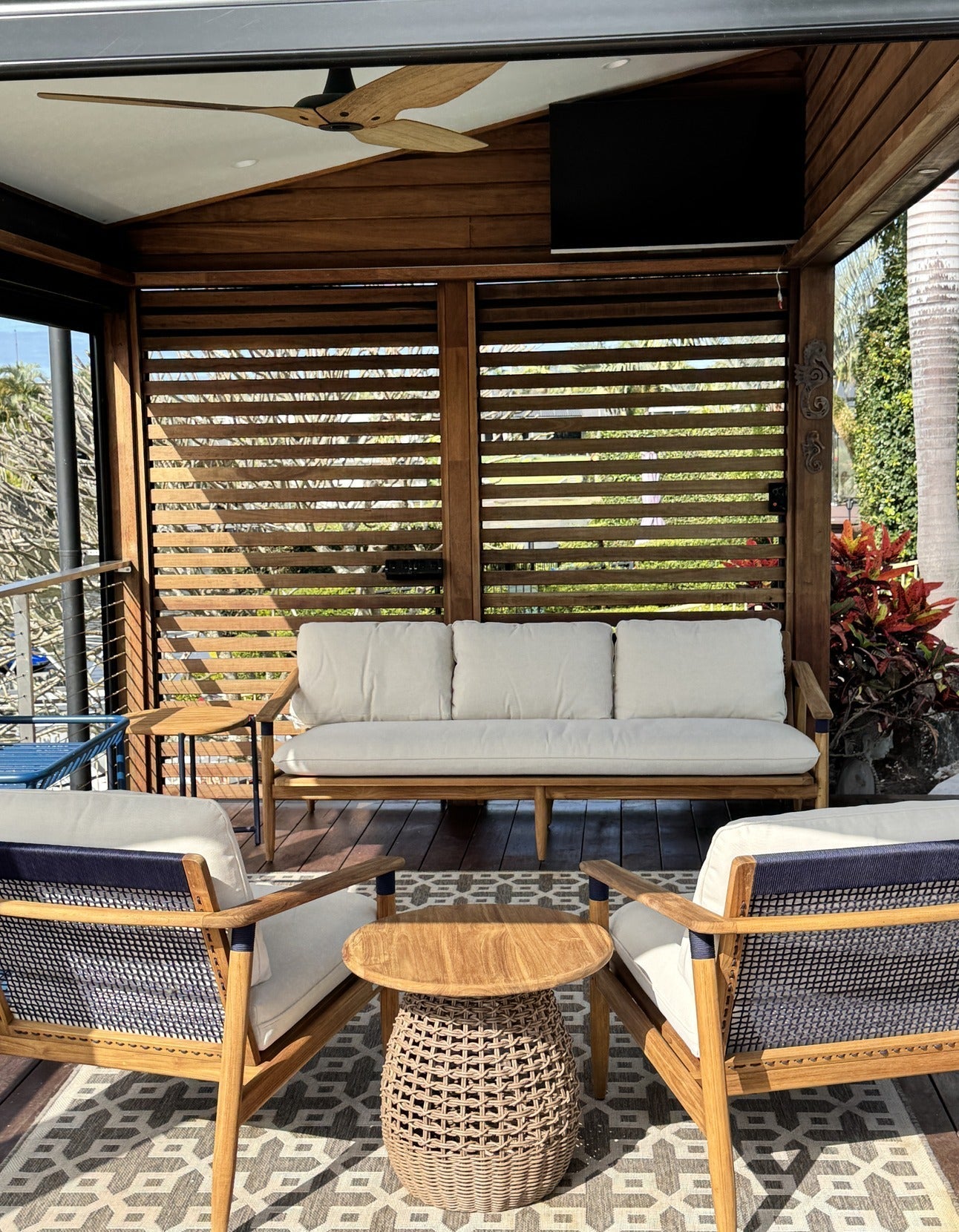
A-Grade teak frames: The benchmark for quality outdoor lounge furniture. High oil content, dimensionally stable, UV-resistant, warm to the touch, improves visually with age. Heavy, which can be a limitation for chairs you move around frequently. See our teak lounge chairs.
Marine-grade powder-coated aluminium frames: Lighter, more colour-flexible, virtually maintenance-free. Excellent coastal performance. The powder coat must be specified to marine grade, standard architectural powder coat will degrade faster in high UV and salt conditions.
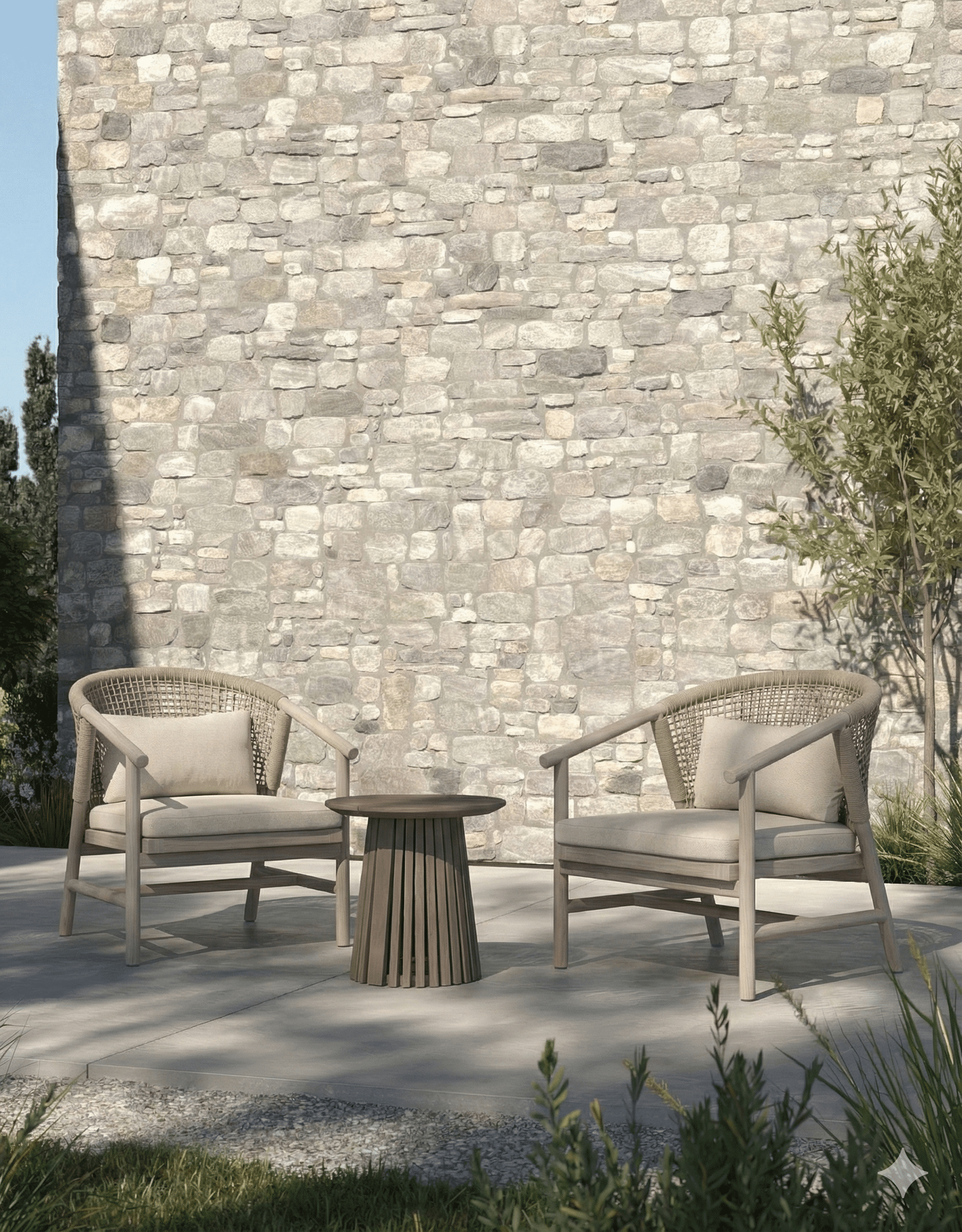
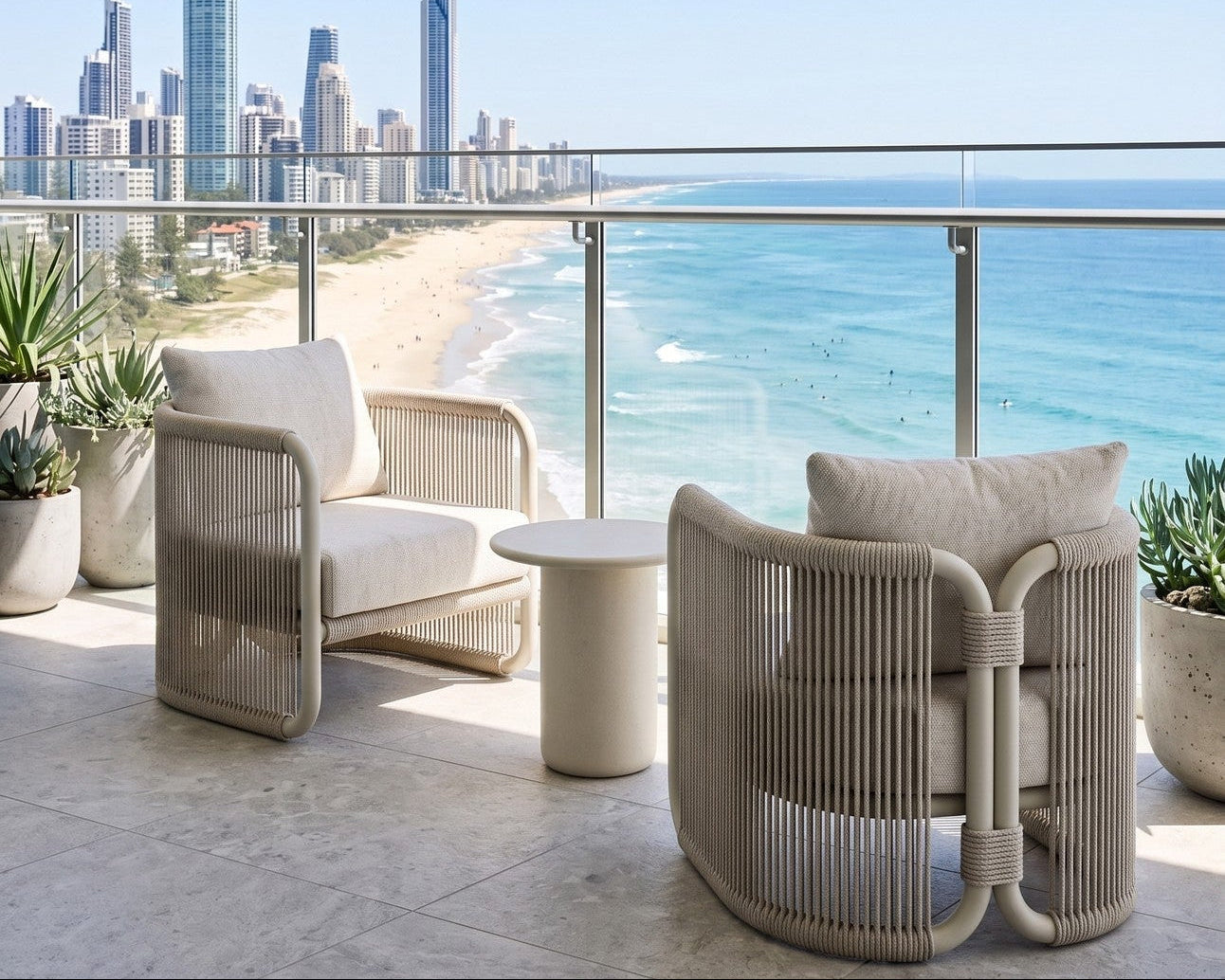
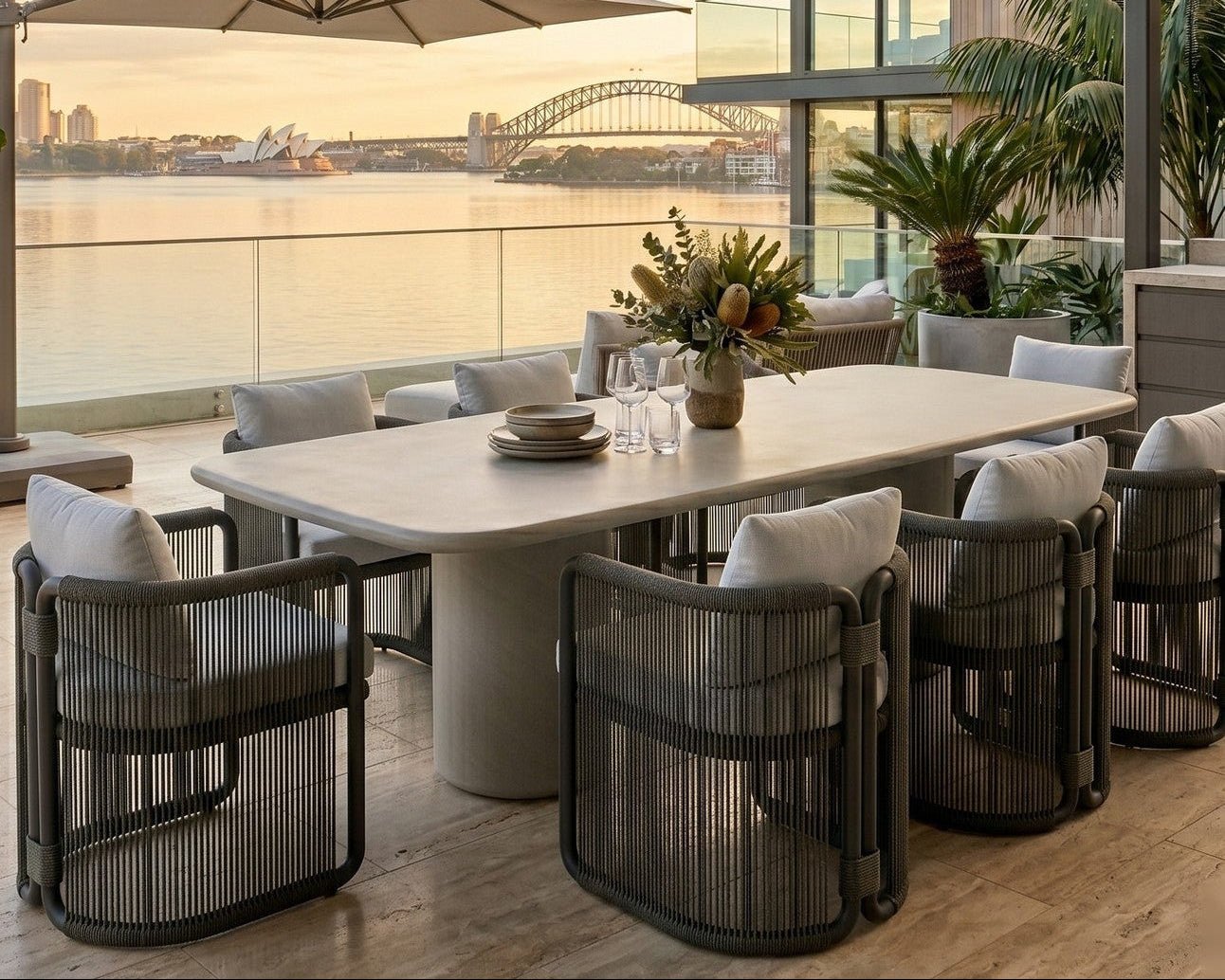
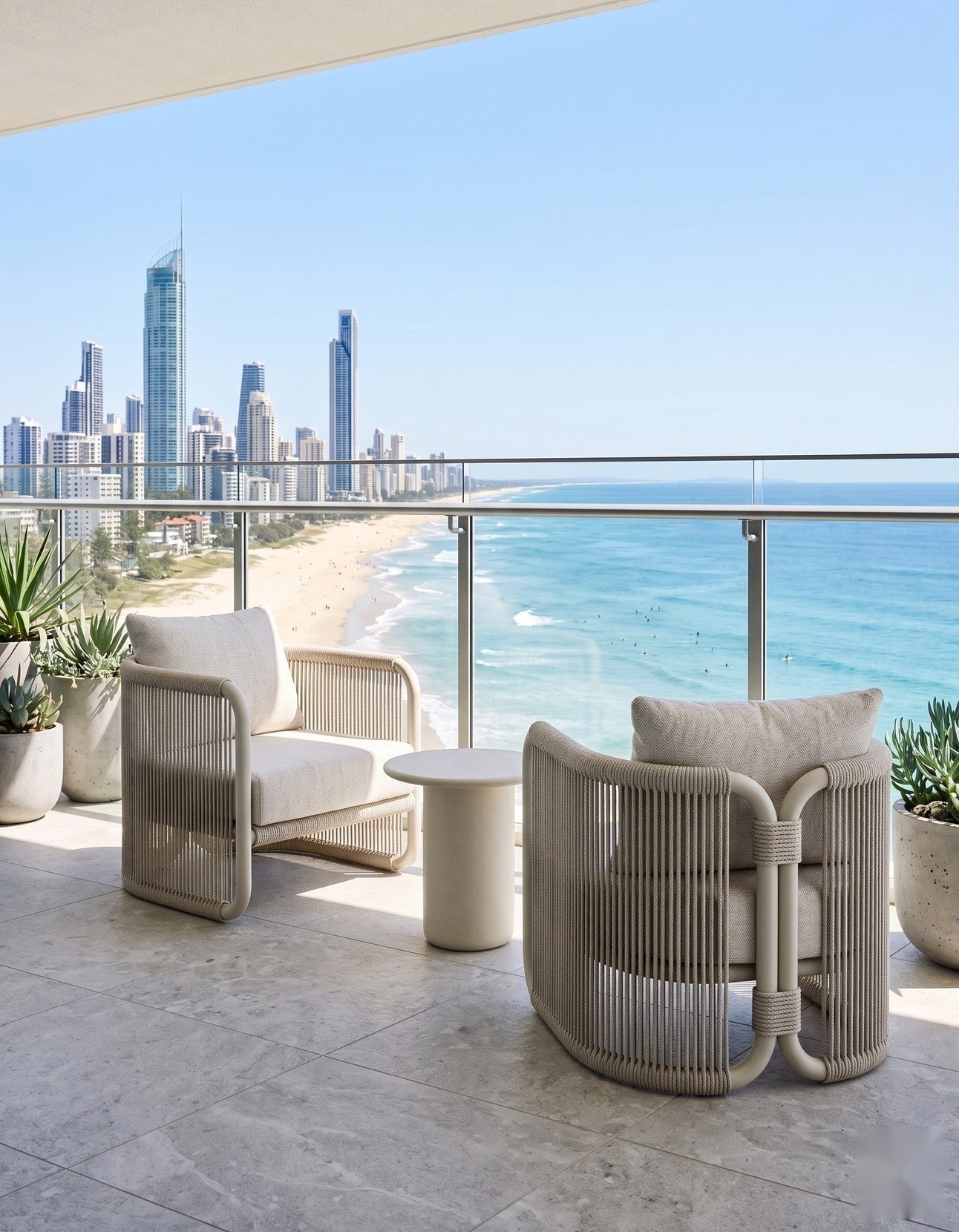
Rope-woven seating on aluminium frames: Combines the lightness of aluminium with the visual and tactile warmth of woven rope. UV-stabilised synthetic rope resists fading and moisture. A popular combination in Australian design because it works both in contemporary and transitional settings.
Synthetic rattan: Available in a wide price range. At the low end, PE rattan can become brittle and discolour in extreme UV within 3–5 years. Quality-specified all-weather synthetic rattan (hand-woven on aluminium frames, using UV-stabilised PE resin) performs much better. The challenge is that material specification is hard to verify by appearance alone.
What seat dimensions should I look for in an outdoor lounge chair?
For a single-person chair that's genuinely comfortable for an average adult:
- Seat width: 65–75 cm. Below 60 cm feels constrictive for extended sitting.
- Seat depth: 50–60 cm as above. Look at the product drawing, not just the headline dimensions.
- Seat height: 35–45 cm for standard lounge feel; 44–48 cm for easier entry/exit if mobility is a consideration.
- Overall width including arms: 80–90 cm for a single chair with arms.
Which Sissonne outdoor lounge chairs work best for different spaces?
From the range, a few specific applications:
- Small balcony or courtyard: Airlie, Capri or Kirra lounge chairs, compact footprints with a genuine lounge proportion, ideal for one or two chairs on a 4–6 sqm balcony
- Garden or alfresco lounge setting: Sissonne sofa range with matching armchairs, modular configurations suited to 10–20+ sqm lounge zones
- Poolside or sunlounge application: Blueys Sunlounge, fully reclinable, A-Grade teak frame, for a use case distinct from a sitting lounge chair
- Covered alfresco or pergola: Any piece in the range works in a covered setting; see our guide on furnishing a covered alfresco
Frequently asked questions
How do I know if an outdoor lounge chair is comfortable without sitting in it?
Look for the seat depth and back angle in the product specifications, these tell you more about comfort than a product photo. Visit a showroom if you're spending above a certain threshold. Our Melbourne and Gold Coast showrooms have all major pieces available to sit in before you buy.
What outdoor lounge chair is best for a poolside setting?
For poolside use, a sunlounge (fully adjustable recline, designed for lying) is different from a lounge chair (upright-ish, designed for sitting). If you want a chair you can sit up in and also recline, look at pieces with an adjustable or multi-position back. A-Grade teak and powder-coated aluminium are both appropriate for poolside; ensure cushion fabric is rated for moisture and UV exposure, Sunproof® acrylic is the standard we use.
How much should I spend on an outdoor lounge chair?
A quality outdoor lounge chair in A-Grade teak or marine-grade aluminium with a Sunproof® cushion starts at roughly $800–$1,200 at retail for a single chair in the Australian market. Below this, the materials or construction generally represent a compromise. The cost-per-year calculation, price divided by real lifespan, almost always favours the quality purchase over the discounted alternative. See our full analysis in is premium outdoor furniture worth it.